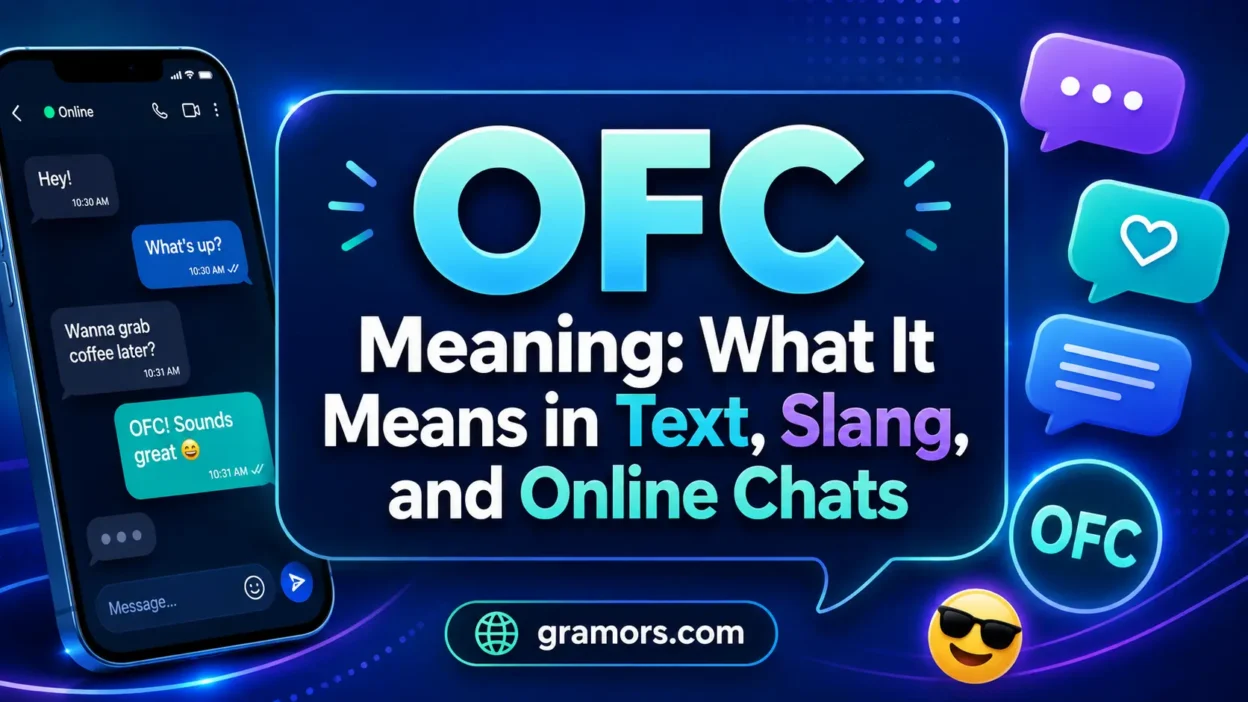
You may see ofc in a text, group chat, comment, or gaming conversation. The three letters can look confusing if you have never seen them before.
In most casual messages, ofc is simply a short way to write “of course.” People use it to agree, confirm something, give permission, or reassure someone.
The tone can change with the sentence around it. A friendly “ofc!” feels different from a dry “ofc you did.” Context matters more than capitalization.
There are also a few unrelated meanings in special settings. This guide explains the main meaning, common uses, tone, examples, and possible confusion.
Quick Answer
OFC meaning is usually “of course” in texts, chats, and social media.
It can express agreement, certainty, permission, or reassurance. It is informal and works best in casual conversations.
TL;DR
• OFC usually means “of course.”
• It is common in informal written conversations.
• It can show agreement, permission, or reassurance.
• Tone can become sarcastic in some sentences.
• Uppercase and lowercase usually mean the same thing.
• Fandom communities may use OFC differently.
What Does OFC Mean?
In everyday texting, OFC means “of course.” It is a shortened written form of the familiar English phrase.
“Of course” can mean yes, certainly, naturally, or definitely. It can also show that something seems obvious.
For example:
Friend: “Can you send me the pictures?”
You: “ofc!”
Here, ofc means, “Of course I can.”
It can also confirm a plan:
Friend: “You’re still coming tonight, right?”
You: “ofc, see you at 7.”
The reply sounds confident and casual.
Another common use is reassurance:
Friend: “Are we still good?”
You: “ofc we are.”
In this example, the writer is trying to remove doubt.
OFC Meaning in Text and Social Media
The basic meaning usually stays the same across texting platforms. OFC normally means “of course” wherever casual conversation happens.
You may see it in:
• Text messages
• Group chats
• Instagram comments or messages
• Snapchat conversations
• TikTok comments
• Discord chats
• Gaming chats
A platform does not normally create a new meaning by itself. The surrounding conversation tells you what the writer intends.
For example:
“Can I tag you in this?”
“ofc 😂”
That means, “Of course you can.”
Another person might write:
“ofc she won again.”
Here, the writer means the result was expected.
Lowercase ofc often looks relaxed and conversational. Uppercase OFC may add visual emphasis, but it does not automatically change the definition.
What Tone Does OFC Have?
OFC can sound friendly, confident, reassuring, obvious, or sarcastic. The words around it create most of that tone.
A friendly reply might be:
“Can you help me study later?”
“ofc!”
The exclamation point makes the answer feel positive.
A reassuring example is:
“You won’t tell anyone, right?”
“ofc not.”
The person is strongly reassuring the other speaker.
However, ofc can sound sarcastic when it introduces an annoying or predictable event.
“ofc the bus is late when I’m already running behind.”
The writer is not cheerfully agreeing. They are expressing frustration about an expected problem.
Compare these examples:
| Context | Best Choice | Why |
| Texting a close friend | ofc | Natural and casual |
| Reassuring someone | ofc! | Warm and confident |
| Professional email | of course | Clearer and more polished |
| Expressing frustration | ofc… | May signal sarcasm |
Punctuation also matters. “ofc!” feels warmer than “ofc.” in many casual conversations.
Still, tone depends on the relationship and full message.
How to Use OFC Naturally
Use ofc when a casual conversation makes “of course” sound natural.
To Agree
“Are you coming with us?”
“ofc.”
The answer means “yes” or “definitely.”
To Give Permission
“Can I borrow your charger?”
“ofc!”
The reply means the other person has permission.
To Reassure Someone
“You’ll text me when you get home?”
“ofc I will.”
This sounds supportive and certain.
To Confirm Something Obvious
“You remembered your birthday plans, right?”
“ofc 😂”
The speaker treats the answer as obvious.
To Show Frustration
“ofc my laptop updates five minutes before class.”
Here, the phrase expresses annoyance rather than agreement.
You can place ofc alone or inside a sentence.
Both of these work naturally:
“ofc!”
“ofc I’ll help you.”
When Not to Use OFC and Common Mistakes
Because ofc is informal, avoid it when polished language is expected.
A formal email should usually use “of course” instead.
Less suitable:
“OFC, I can provide the requested document.”
Better:
“Of course, I can provide the requested document.”
Casual workplace chats can be different. If coworkers regularly use abbreviations, ofc may feel normal.
Still, use the full phrase when clarity or professionalism matters.
Another mistake is assuming the F always represents a swear word. Some people use or interpret OFC that way, especially for emphasis.
However, everyday texting often uses ofc simply for “of course.” Do not assume profanity without supporting context.
It is also incorrect to believe uppercase OFC must have a different slang meaning. Capitalization alone does not decide the meaning.
Does OFC Ever Mean Something Else?
Yes. OFC can represent other phrases, so context is important.
In fandom and fanfiction discussions, OFC can mean “original female character.”
For example:
“The story follows an OFC who joins the crew.”
Here, “of course” would make no sense. The writer is describing a fictional character.
You may also encounter uppercase OFC as an abbreviation for organizations or specialized terms. These meanings are separate from texting slang.
Some dictionaries also record ofc as an abbreviation for office. That is not the meaning people usually intend in casual online replies.
A simple rule helps:
If someone writes “ofc!” as an answer, it probably means “of course.”
If the message discusses characters, organizations, or a specialized subject, check the context.
OFC Pronunciation and Part of Speech
OFC is mainly written shorthand. In normal speech, people usually say “of course” instead of pronouncing the letters.
If someone does read the letters individually, they would say:
O-F-C: “oh-eff-see”
However, you normally do not need to pronounce it during conversation.
Grammatically, ofc functions like the phrase “of course.” It can serve as a short response or modify a statement.
As a reply:
“Can I come?”
“ofc.”
Inside a sentence:
“ofc I remembered.”
It is best described as an informal written abbreviation or shorthand expression rather than a separate standard English word.
Related Terms, Synonyms, and Opposites
Several expressions can replace ofc when it means “of course.”
Close alternatives include:
• Definitely — strong agreement or certainty
• Absolutely — enthusiastic agreement
• Certainly — slightly more formal
• Sure — common and casual
• Naturally — something expected or unsurprising
• Obviously — something considered clear
They are not interchangeable in every sentence.
For example, “obviously” can sound more dismissive than “of course.”
Compare:
“Can you help me?” — “Of course.”
This sounds helpful.
“Can you help me?” — “Obviously.”
This may sound impatient or sarcastic.
OFC does not have one exact antonym because its function changes by context.
When it means an affirmative “of course,” possible contrasting replies include “no,” “probably not,” or “not at all.”
Mini Quiz: Test Your Understanding of OFC
1. What does OFC usually mean in a text?
A. Off camera
B. Of course
C. Only for customers
2. Which situation is best for “ofc”?
A. A casual message to a friend
B. A formal legal document
C. A college application essay
3. What does OFC likely mean here?
“My story has an OFC who moves to New York.”
A. Of course
B. Original female character
C. Official comment
4. Can “ofc” sound sarcastic?
A. Never
B. Yes, depending on context
C. Only when uppercase
Answer Key
- B — Of course
- A — A casual message to a friend
- B — Original female character
- B — Yes, depending on context
Frequently Asked Questions About OFC
What does OFC mean in text?
In most texts, OFC means “of course.” It can show agreement, confirmation, permission, or reassurance.
The surrounding sentence can also make it sound sarcastic or frustrated.
What does OFC stand for in texting?
OFC usually stands for “of course” in everyday texting. It is a quick, informal way to write the full phrase.
You will often see it in short replies between friends.
Is OFC slang?
Yes. OFC is informal texting and internet shorthand.
It fits casual conversations better than formal emails, essays, applications, or professional documents.
Does OFC mean “of course” or “of f***ing course”?
Most ordinary texting uses OFC to mean “of course.”
Some people use or interpret it as the stronger profane version. Tone and relationship can help reveal the intended meaning.
Is OFC rude?
OFC is not automatically rude. A friendly “ofc!” can sound warm and helpful.
It may sound dismissive when paired with sarcasm, frustration, or a cold response.
What does OFC mean from a girl or a guy?
The basic meaning does not normally change based on gender. From either person, ofc usually means “of course.”
Look at the conversation and tone rather than the sender’s gender.
What does OFC mean on Snapchat, Instagram, or TikTok?
It normally means “of course,” just as it does in regular texting.
A fandom discussion may use OFC for “original female character,” so context remains important.
Conclusion
The OFC meaning in most texts and online chats is simply “of course.”
Use it for casual agreement, permission, confirmation, or reassurance. When the setting is formal, write “of course” in full.
The next time you see ofc, read the whole message to understand its tone and context.