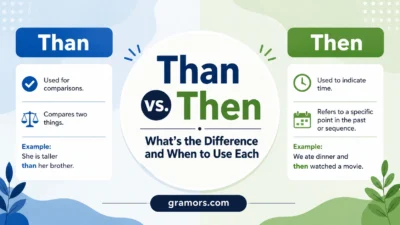

Many English speakers confuse “quiet” and “quite” because the words look and sound similar in fast speech.
Still, they have completely different meanings and grammar roles. “The room was quiet” describes silence or calmness, while “The movie was quite good” changes the intensity of the description.
Understanding the difference matters because using the wrong word can completely change the meaning of a sentence. In a quiet vs quite comparison, grammar role is just as important as spelling.
Quick Answer
“Quiet” relates to silence, calmness, or little noise.
Examples:
- “Please stay quiet.”
- “It was a quiet neighborhood.”
“Quite” is mainly an adverb that modifies degree or intensity.
Examples:
- “She is quite busy today.”
- “That test was quite difficult.”
A simple way to remember the difference:
- “Quiet” describes calmness or silence.
- “Quite” modifies how strong or noticeable something is.
The words are not interchangeable in standard English.
Why People Confuse Them
The confusion mostly comes from spelling and pronunciation. The two words differ by only one letter placement, and many speakers pronounce them very similarly in casual conversation.
Fast typing also creates mistakes like:
- incorrect: “The office was quite today.”
- correct: “The office was quiet today.”
Autocorrect and quick messaging can make the problem worse because both spellings are valid English words.
Another issue is speech rhythm. In rapid conversation, the middle sounds can blur together, making it harder for writers to remember which spelling fits the sentence.
Key Differences At A Glance
| Context | Best Choice | Why |
|---|---|---|
| Describing silence | quiet | Refers to calmness or low noise |
| Modifying intensity | quite | Functions as an adverb |
| Describing a peaceful place | quiet | Acts as an adjective |
| Emphasizing a description | quite | Modifies adjectives or adverbs |
| Telling someone to calm down | quiet | Can function as a verb |
| Saying something is fairly good | quite | Shows degree or intensity |
Quick Comparison Block
- Quiet = calm, silent, peaceful
- Quite = fairly, rather, completely, or very
- Quiet can be an adjective, noun, or verb
- Quite is mainly an adverb
Meaning and Usage Difference
“Quiet” usually describes little noise or a calm atmosphere.
Examples:
- “We enjoyed a quiet evening.”
- “The classroom became quiet.”
It can also function as a verb meaning to calm or silence something.
- “Please quiet the crowd.”
- “The teacher quieted the room.”
Less commonly, “quiet” can act as a noun referring to calmness or silence.
- “She finally found some quiet after work.”
“Quite,” however, works mainly as an adverb or intensifier. It modifies adjectives, adverbs, or entire ideas.
Examples:
- “The restaurant was quite expensive.”
- “He answered quite quickly.”
- “That was quite a surprise.”
In American English, “quite” can vary in strength depending on tone and context. “Quite good” may mean “fairly good” or “very good” depending on how the speaker says it.
One useful grammar clue:
- “Quiet” can directly describe nouns.
- “Quite” usually modifies another word.
Correct:
- “a quiet street”
- “quite interesting”
Incorrect:
- “a quite street”
Tone, Context, and Formality
“Quiet” often appears in emotional, environmental, and behavioral contexts.
Examples:
- “It was a quiet evening.”
- “The children stayed quiet during the movie.”
“Quite” commonly appears in conversational emphasis and descriptive writing.
- “The performance was quite impressive.”
- “That’s quite enough.”
In American English, “quite” is common in both casual and professional writing, though tone can affect how strong it sounds.
British English sometimes uses “quite” with slightly different intensity, but the basic grammar role remains the same.
Neither word is especially formal or informal. Correctness depends on sentence meaning and grammar structure.
Which One Should You Use?
Ask yourself a simple question:
- Is the sentence about silence or calmness?
- Or is it modifying intensity or degree?
Use “quiet” for:
- silence
- peacefulness
- calming someone down
Examples:
- “The library stayed quiet.”
- “Please quiet the dog.”
Use “quite” for:
- emphasis
- degree
- intensity
Examples:
- “She was quite excited.”
- “That project took quite a while.”
A quick grammar-position test also helps.
If the word comes before an adjective or adverb to strengthen it, “quite” is usually correct:
- “quite busy”
- “quite slowly”
If the word describes a person, place, or atmosphere directly, “quiet” is usually correct:
- “quiet room”
- “quiet voice”
When One Choice Sounds Wrong
Some mistakes immediately sound unnatural.
Incorrect:
- “The library was quite.”
Correct:
- “The library was quiet.”
Why? Because the sentence needs a descriptive adjective about noise level.
Incorrect:
- “She felt quiet happy.”
Correct:
- “She felt quite happy.”
Why? Because the sentence needs an intensifier modifying “happy.”
Incorrect:
- “Please quite down.”
Correct:
- “Please quiet down.”
Here, the sentence needs the verb related to calming or reducing noise.
Using the wrong word can confuse readers because the grammar structure no longer works naturally.
Common Mistakes
These errors appear often in emails, schoolwork, and online writing.
- Incorrect: “The room was quite.”
Correct: “The room was quiet.” - Incorrect: “I’m quiet sure.”
Correct: “I’m quite sure.” - Incorrect: “Please quite the crowd.”
Correct: “Please quiet the crowd.” - Incorrect: “It was a quite afternoon.”
Correct: “It was a quiet afternoon.”
One practical memory clue:
- “Quiet” contains “quiet room” ideas like calmness and silence.
- “Quite” usually strengthens another word.
Everyday Examples
Work:
- “The office stayed quiet during the presentation.”
- “The new policy is quite helpful.”
School:
- “Students remained quiet during the test.”
- “The assignment was quite challenging.”
Conversation:
- “She has a quiet voice.”
- “That’s quite interesting.”
Daily life:
- “We found a quiet coffee shop downtown.”
- “The movie was quite funny.”
Travel:
- “The hotel room was surprisingly quiet.”
- “The traffic was quite heavy this morning.”
Writing:
- “Please keep quiet while others are reading.”
- “Her explanation was quite clear.”
Family:
- “The baby finally became quiet.”
- “Dinner was quite good tonight.”
Dictionary-Style Word Details
Verb
- Quiet: Fully applies. As a verb, “quiet” means to calm, silence, or reduce noise.
- “The coach quieted the crowd.”
- “Please quiet the barking dog.”
- Quite: Not used as a verb in standard English.
Noun
- Quiet: Can function as a noun meaning calmness or silence.
- “She needed some quiet after the long day.”
- Quite: Not commonly used as a noun.
Synonyms
- Quiet: Closest alternatives include:
- “calm”
- “silent”
- “peaceful”
These vary slightly by context.
- Quite: Closest alternatives include:
- “fairly”
- “rather”
- “completely”
Intensity can change depending on tone and sentence structure.
Example Sentences
- Quiet:
- “The street became quiet after midnight.”
- “Please quiet the audience.”
- Quite:
- “The lecture was quite informative.”
- “She completed the task quite quickly.”
Word History
- Quiet: Comes through French and Latin roots connected to rest, calmness, and stillness.
- Quite: Developed historically as a degree or intensity modifier in English usage.
The historical background is useful mainly for understanding how the meanings developed differently.
Phrases Containing
- Quiet:
- “keep quiet”
- “quiet place”
- “quiet down”
- Quite:
- “quite a lot”
- “quite enough”
- “quite right”
These expressions are standard and widely used in modern American English.
Conclusion
The difference between “quiet” and “quite” is simple once you focus on meaning and grammar role.
“Quiet” relates to silence, calmness, or reducing noise:
- “The neighborhood stayed quiet all night.”
“Quite” modifies intensity or degree:
- “The neighborhood was quite peaceful.”
In quiet vs quite usage, choosing the correct word improves clarity immediately. If the sentence discusses calmness, use “quiet.” If it strengthens another idea, use “quite.”