
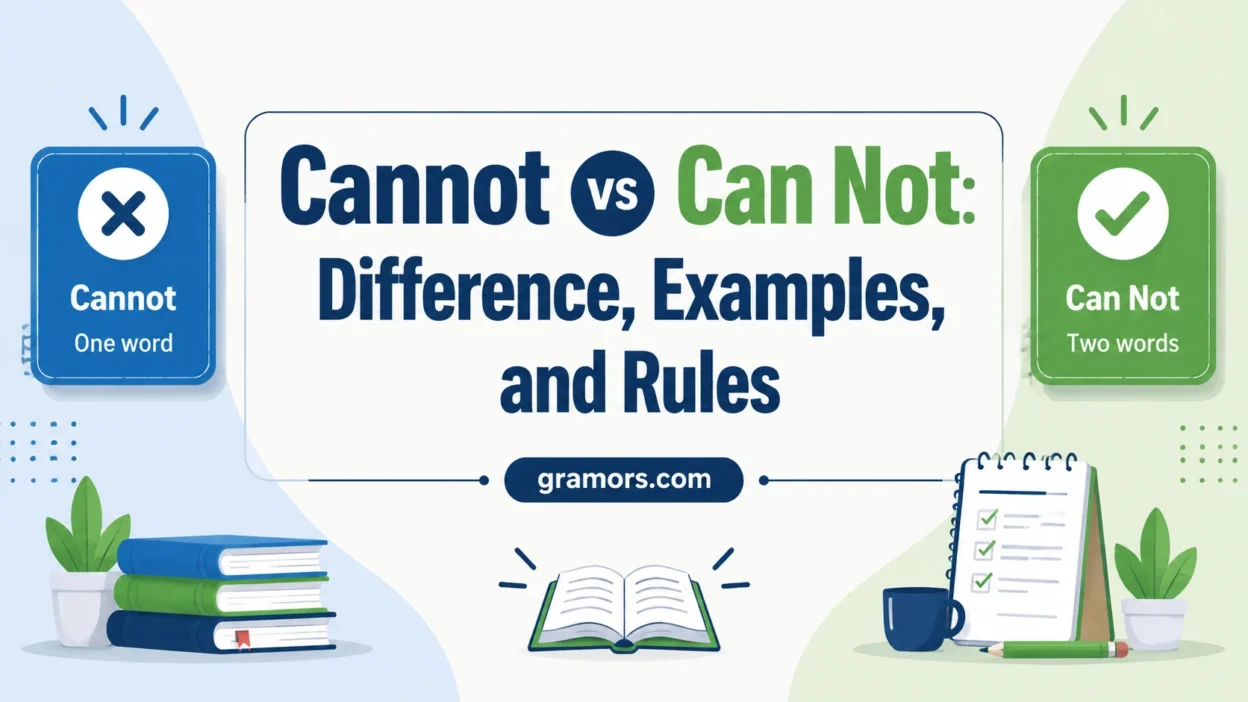
The confusion between cannot vs can not is common because both forms involve can and not. The one-word form, cannot, is the standard choice in most writing.
I cannot attend.
The two-word form, can not, has limited correct uses.
She can not only sing but also dance.
So, can not is not always wrong. It is just not the normal default when you mean cannot.
Quick Answer
Use cannot most of the time. It is the standard form in formal, school, business, and edited writing.
We cannot approve this request today.
Use can not when not starts a separate phrase, especially not only, or when you are making a rare contrast or emphasis.
She can not only write well but also edit quickly.
Can’t is the contraction of cannot. It is fine in casual writing, but this article focuses on cannot and can not.
Why People Confuse Them
People confuse the forms because cannot looks like two words joined together. Since can not seems logical, many writers wonder if the space matters.
The contraction can’t adds another layer of confusion.
Cannot is one word.
Can not is two words.
Can’t is a contraction.
Do not call cannot a contraction. It is the standard one-word negative form used for most meanings of can not.
Key Differences At A Glance
| Context | Best Choice | Why |
|---|---|---|
| Standard negative form | cannot | It is the normal spelling. |
| Formal writing | cannot | It looks polished and expected. |
| Business or academic writing | cannot | It avoids distraction. |
| Before “not only” | can not | The word not belongs with “not only.” |
| Rare contrast or emphasis | can not | It can stress choice or separation. |
| Casual speech or texts | can’t | It is the common contraction. |
Compact comparison:
- Cannot is one word.
- Can not is two words.
- Cannot is the default spelling.
- Can not is correct in limited structures.
- Can’t is informal or conversational.
- When unsure, choose cannot.
Meaning and Usage Difference
Cannot works as the standard negative form of can. It can show inability, prohibition, or impossibility.
I cannot help today.
Students cannot leave during the test.
That cannot be true.
In these sentences, cannot means the person is unable, not allowed, or that something is not possible.
Can not is different when not belongs to a separate phrase.
I can not only help but also lead.
Here, not is part of not only…but also. Writing cannot only would change the structure and may confuse the meaning.
Can not can also appear in rare contrastive sentences.
You can go, or you can not go.
That means the person has a choice. In most ordinary negative sentences, though, cannot is better.
Tone, Context, and Formality
Cannot is preferred in formal, academic, business, and edited writing.
Email:
We cannot process the order without the invoice.
School essay:
The character cannot escape the results of his choice.
Business message:
We cannot confirm the date yet.
Can not may look awkward unless the sentence structure needs it.
Natural:
She can not only solve the problem but also explain it.
Awkward as a default:
We can not process the order today.
Better:
We cannot process the order today.
In dialogue, can’t may sound more natural, but cannot is still the safer written choice when the tone is serious or formal.
Which One Should You Use?
Choose cannot by default.
We cannot approve this.
I cannot attend the meeting.
They cannot find the file.
Choose can not when not begins a separate phrase.
She can not only teach the class but also design the lessons.
The app can not only track spending but also create reports.
Use can not for rare choice contrast.
You can go or can not go; it is your decision.
That kind of emphasis is uncommon. In normal writing, cannot is almost always the better choice.
When One Choice Sounds Wrong
The wrong form can change the sentence.
Wrong for the intended meaning: She cannot only write but also edit.
Correct: She can not only write but also edit.
Why: The phrase is not only…but also, so keep can separate from not only.
Awkward: We can not attend the meeting.
Better: We cannot attend the meeting.
Why: This is a normal negative sentence, so cannot is the standard spelling.
Different meaning:
She cannot only write.
She can not only write but also teach.
The first sentence suggests she is not limited to writing, or that writing alone is not possible in context. The second uses the clear not only…but also structure.
Context changes the answer.
Common Mistakes
Mistake: Using can not as the default.
Wrong: I can not open the file.
Right: I cannot open the file.
Mistake: Using cannot before not only.
Wrong: He cannot only cook but also bake.
Right: He can not only cook but also bake.
Mistake: Confusing cant and can’t.
Wrong: I cant go.
Casual: I can’t go.
Standard: I cannot go.
Mistake: Using can not in formal writing without a reason.
Awkward: The office can not issue refunds.
Better: The office cannot issue refunds.
Mistake: Missing the contrast meaning.
Unclear: You cannot come, or you cannot come.
Clear: You can come, or you can not come.
The quick fix: use cannot unless not clearly belongs to the words after it.
Everyday Examples
School:
I cannot finish the project tonight.
She can not only read the poem but also explain it.
Work:
We cannot approve the request yet.
This report can not only summarize sales but also show trends.
Texting:
I can’t make it tonight.
I cannot promise I’ll be free tomorrow.
Rules:
You cannot park here after 6 p.m.
Guests cannot enter without a pass.
Ability:
He cannot lift the box alone.
The new printer can not only scan but also copy.
Permission:
You cannot use this room without a reservation.
You can go or can not go; it is up to you.
Most daily sentences use cannot. Use can not only when the structure needs two words.
Dictionary-Style Word Details
Verb
• cannot: Functions as the negative form of the modal verb can.
• can not: A separated form of can plus not, not usually treated as one separate headword.
Examples:
I cannot stay.
She can not only stay but also help clean up.
Noun
• cannot: Not a noun.
• can not: Not a noun.
Neither form names a person, place, thing, or idea.
Synonyms
• cannot: Closest plain alternatives include be unable to, be not allowed to, and be impossible to, depending on the sentence.
• can not: These same alternatives apply only when the phrase means cannot. In not only sentences, the structure is different.
Example:
I cannot attend.
I am unable to attend.
Example Sentences
• cannot, inability: I cannot reach the top shelf.
• cannot, prohibition: You cannot enter without a ticket.
• cannot, impossibility: That cannot be the right address.
• can not, not only: She can not only lead the team but also train new hires.
• can not, contrast: You can accept the offer, or you can not accept it.
Word History
• cannot: This form has a long history in English and became the standard one-word spelling for the negative of can.
• can not: This remains the separated form of can plus not, used when the sentence structure calls for separation.
The modern rule matters most: cannot is the usual form, and can not is limited.
Phrases Containing
• cannot: cannot help, cannot but, cannot stand, cannot wait.
• can not: can not only…but also, can not go in rare choice or emphasis contexts.
These phrases show why cannot is the default and can not is the exception.
FAQs
Is “can not” wrong?
No, but it is limited. Use it when not belongs to a separate phrase.
She can not only sing but also dance.
Is “cannot” one word?
Yes. Cannot is the standard one-word form.
I cannot attend.
Is “can’t” acceptable?
Yes, in casual writing and speech.
I can’t go tonight.
For formal writing, use cannot.
When should I use “can not only”?
Use can not only before a but also phrase.
The phone can not only record video but also edit it.
Should I write “cannot” or “can not” in school writing?
Use cannot unless the sentence has a structure like not only…but also.
The answer cannot be correct.
What is the easiest rule?
Use cannot by default. Use can not only when not clearly belongs to the next phrase.
Conclusion
The rule for cannot vs can not is simple.
Cannot is the safest standard form. Can not is correct only in limited cases, such as not only phrases or rare contrast.
I cannot go today.
I can not only help today but also lead the meeting.