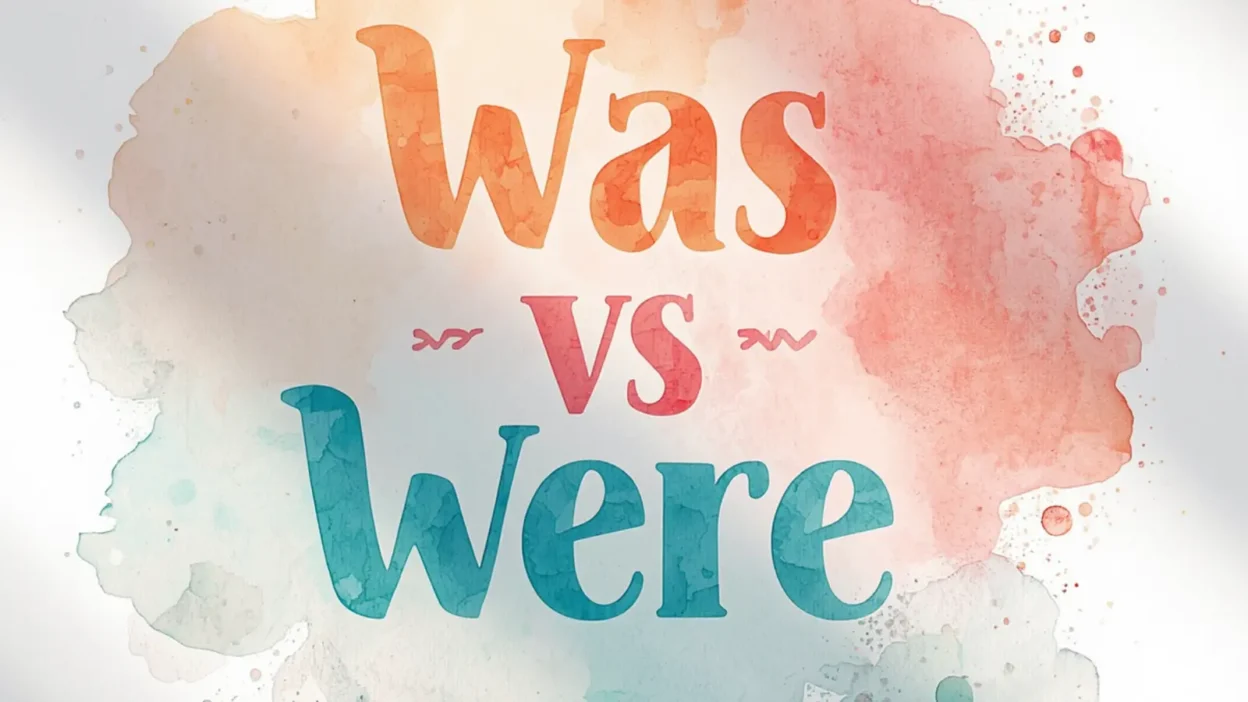
Many English learners confuse “was” and “were” because both come from the same verb: “to be.” They are used to talk about the past, but the correct form depends on the subject.
For example:
- “I was happy.”
- “They were happy.”
Both describe past situations, but the verb changes based on who or what you are talking about. That small shift is where most confusion starts.
Quick Answer
Use “was” with singular subjects in the past:
- I was
- He was
- She was
- It was
Use “were” with plural subjects:
- You were
- We were
- They were
Important exception:
- In imaginary or conditional sentences, “were” is often used even with singular subjects:
- “If I were rich…”
Simple memory rule:
- Was = one person or thing (past)
- Were = more than one + special conditionals
Why People Confuse Them
The confusion happens because “was” and “were” are irregular forms of the verb “be.” Unlike regular verbs, English changes the word completely in the past tense.
Another reason is conditional sentences:
- “If I was you…” (common in speech)
- “If I were you…” (grammatically standard)
Both forms are heard in real life, which makes learners unsure about the rule.
Questions also add confusion:
- “Was he there?”
- “Were they there?”
The structure changes depending on the subject, not the meaning.
Key Differences At A Glance
| Context | Best Choice | Why |
|---|---|---|
| I, he, she, it | Was | Singular past form |
| You, we, they | Were | Plural past form |
| Hypothetical situations | Were | Subjunctive mood |
| Past facts | Was/Were | Depends on subject |
| Questions | Was/Were | Subject decides form |
Quick Comparison
| Feature | Was | Were |
|---|---|---|
| Subject type | Singular | Plural |
| Time | Past | Past |
| Example | She was here | They were here |
| Conditional use | Less common | Standard (“If I were…”) |
Meaning and Usage Difference
Both “was” and “were” are past tense forms of the verb “to be.” They describe states, actions, or conditions in the past.
- “He was tired yesterday.”
- “They were tired yesterday.”
They are also used in questions:
- “Was she at school?”
- “Were they at school?”
In conditional or imaginary situations, “were” often appears even with singular subjects:
- “If I were taller, I would play basketball.”
This does not change the past meaning—it changes the mood to hypothetical.
Tone, Context, and Formality
Both forms are neutral and used in:
- Speaking
- Writing
- Formal English
- Informal English
Examples:
- “She was late to class.”
- “They were late to class.”
A more formal conditional structure:
- “If I were in your position, I would wait.”
Casual speech may sometimes relax grammar rules, but formal writing follows strict subject agreement.
Which One Should You Use?
First, check the subject:
- Singular → use “was”
- Plural → use “were”
Then check if the sentence is hypothetical:
- Real past → follow normal rule
- Imaginary condition → often use “were”
Examples:
- “The teacher was here.”
- “The teachers were here.”
- “If I were you, I would call.”
When One Choice Sounds Wrong
Some sentences sound incorrect because they break subject agreement rules.
Wrong:
- “They was late.”
- “She were happy.”
- “I were at home.”
Correct:
- “They were late.”
- “She was happy.”
- “I was at home.”
Even without knowing grammar rules, native speakers notice these errors instantly because they break natural sentence structure.
Common Mistakes (and Quick Fixes)
Mistake: Using “was” with plural subjects
Incorrect:
- “They was playing football.”
Correct:
- “They were playing football.”
Mistake: Using “were” with singular subjects
Incorrect:
- “She were busy.”
Correct:
- “She was busy.”
Mistake: Conditional confusion
Incorrect:
- “If I was you…”
Correct (formal standard):
- “If I were you…”
Mistake: Question errors
Incorrect:
- “Were he there?”
Correct:
- “Was he there?”
Everyday Examples
School:
- “I was absent yesterday.”
- “We were in class.”
Work:
- “The manager was busy.”
- “The employees were late.”
Daily life:
- “She was at home.”
- “They were at the park.”
Questions:
- “Was it raining?”
- “Were you at the store?”
Hypotheticals:
- “If I were rich, I would travel.”
- “If we were ready, we would start.”
Dictionary-Style Word Details
Verb
- Was: Past singular form of the verb “be,” used with I, he, she, it.
- Were: Past plural form of the verb “be,” used with you, we, they, and in subjunctive mood.
Noun
- Was: Not used as a noun.
- Were: Not used as a noun.
Synonyms
- Was: no direct synonym; context alternatives include “existed,” “occurred”
- Were: no direct synonym; context alternatives include “existed,” “occurred”
Example Sentences
- Was: “He was late to school.”
- Was: “I was tired yesterday.”
- Were: “They were excited.”
- Were: “We were ready.”
Word History
Both forms come from Old English verb systems of “be.” Over time, “be” developed multiple forms depending on tense and subject.
Phrases Containing
- Was: “was born,” “was going,” “was there”
- Were: “were you,” “were to,” “were not”
FAQ
Why do we say “I was” but “they were”?
Because English uses different past forms depending on singular and plural subjects.
Is “I were” ever correct?
Yes, in hypothetical sentences:
- “If I were you…”
Can “were” be used with singular subjects?
Yes, in conditional or imaginary situations.
Is “was” or “were” more formal?
Neither. Both are neutral; usage depends on grammar rules.
What is the simplest rule?
- Was = singular past
- Were = plural past + conditionals
Conclusion
The difference between was vs were is based on subject agreement and context.
- Use “was” for singular past subjects.
- Use “were” for plural subjects and hypothetical situations.
Final examples:
- “She was at home.”
- “They were at home.”
Once you identify the subject and the situation, choosing the correct form becomes quick and natural.